
“ Dharma Winds Zen Sangha” (ch. Fa Feng Chan Yuen – jp. Ho Fu Zen Kai – 法風 僧 院-) is a lay Chan/Zen Buddhist community under the Chan/Zen teachings of its main teacher, Yao Xin Shakya(Rev. Luis KaiUn Lista).
DWZS is a community and an ordination platform in both the lineage of the Zen Buddhist Order of Hsu Yun –虚 雲 禪 院– ZBOHY (zatma.org) and the Still Center Zen Order (a branch of the Clear Mind Zen Order in the lineage of Soyu Matsuoka Roshi).
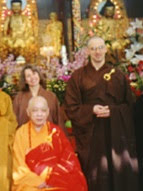
The Linji (jp. Rinzai) and YunMen (jp. Ummon) Chan Lineage of Grand Master HsuYun, through Chan Master WeiMiao JyDin Shakya, Venerable Dharma Teacher ChuanYuan MingZhen Shakya and ChuanZhi Shakya (the founders of the Zen Buddhist Order of HsuYun), is the historical Root Lineage of our community.
We also integrate methods and teachings from the Soto Zen tradition, in the lineage of Soyu Matsuoka Roshi. And since 2022, the Still Center Zen Order founded by Ryuko Roshi (an affiliated branch of the Order of Clear Mind Zen founded by Daiho Hilbert Roshi, leader of the McGuire-Hilbert line of the Matsuoky Roshi Lineage) is our Main Zen Lineage.
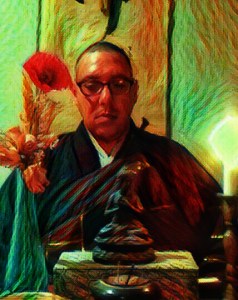
Yao Xin Shakya, Luis Kaiun Lista, practices Buddhism since his adolescence. He was ordained as a Chan Priest by MingZhen Shakya in 2011 in the Yunmen lineage, and was received as a Transmitted Head Priest (Chan Master) in the Linji Lineage of the Zen Buddhist Order of Hsu Yun (founded by WeiMiao JyDin Shakya) by ChuanSheng Shakya in 2015. He was a direct disciple of Ming Zhen Shakya (co-founder of our Chan Order) for many years and he is the founder and current « Prior » of Dharma Winds Zen Sangha. Since 2022, He is also a Priest-in-training under Tim Ryuko Landgell Roshi (Still Center Zen Order) in the Soto Zen lineage of Matsuoka Roshi, through the McGuire-Hilbert, Order of Clear Mind Zen, lineage.
This Sangha was created in September 15 2015 as a community of trained Lay Dharma Teachers named« Chan/Zen Priests ». Our community follows the Five Lay Precepts and the Mahayana Bodhisattva Precepts transmitted by the “Brahma Net Sutra”. We are a lay community of Chan/Zen Priests, our Priests aren’t monks and do not follow the full 250 Vinaya rules set.
The Sangha is based on voluntary work and Dana (grateful donations) and its services are free of charge.
Mission and goals
“Dharma Winds Zen Sangha”, like all Western sanghas sees itself as a mediator between East and West.
Our main mission is to share the teachings of Master Hsu Yun and Matsuoka Roshi and the great masters of the Chan/Zen School of Buddhism to the West. And to continue the tradition of Chan Buddhism in the West in a pragmatic, life-practical, and secular way with the profound wish to help all beings. Our community isn’t based on copying Asian culture, its religious structures or folklore.
It is about practicing Chan/ Zen Buddhism sincerely as Westerners in our own time and place, with Simplicity – Humility – Sincerity (DWZS Credo).
For this the community uses different methods and procedures:
– Study of Chan and Soto Zen Buddhism through the legacy teachings of our tradition (Empty Cloud Manual, 7th World Manual, Heart of Keeping the Light manual, Selections from master Hanshan, Selections from master Hsu Yun, Flowers of Wu, … Selections of Dogen’s, Ejo’s and Keizan’s teachings, and selections of Matsuoka Roshi, Daiho Roshi and Ryuko Roshi’s Collected Soto Zen Teachings…).
– Lectures and teachings on the practice of Chan/Zen Buddhism (mainly Nienfo/Nembutsu, Huatou/Wato, KuanYin Chan/Kannon Zen and MoChao Chan/Mokusho Zen).
– Regular Intensive days of practice (Zuochanhui/Zazenkai) offered locally and online.
– Direct, personal supervision of students, candidates and members of the community through face to face or distant meetings is an essential part of our method.
In a nutshell, the purpose of our community is to adapt and share the practice of Chan/Zen in our Western context in order, we hope, to plant a seed of Simple, Humble and Sincere “Western Zen”.
We insist on the fact that studying, becoming a formal student or taking any kind of precepts is totally free of charge in our community. Some special services or workshops may be on paid or on Dana/donation base, these being totally optional services or workshops.
Organization structure
According to the statutes of the community, Dharma Winds Zen Sangha is a participative structure based on the free participation of its member and is comprised of several Chan/Zen Groups/Hermitages, under the Chan and Soto Zen teachings of its main teacher, Yao Xin Shakya (Rev. Luis Yoxin KaiUn Lista). All the Chan/Zen Groups/Hermitages share a common teacher, lineage, legacy teachings and forms, yet manifest the same Chan and Soto Zen Dharma differently, depending on the particular needs of their local community.
Each Chan/Zen Hermitage is led by an ordained Chan/Zen Priest (Transmitted Priest/Sensei). Each Transmitted Priest is authorized to teach as a Transmitted Chan/Zen Priest (Sensei) by YaoXin Shakya (Rev. Yoxin KaiUn Lista).
A Chan/Zen Hermitage is primarily a place where a priest lives and shares his Buddhist practice with others. It is a place to practice in simplicity, humility and sincerity and doesn’t necessary offer all the services a Buddhist temple or monastery may offer.
Our community is not a proselytizing institution. We give precepts free of charge to people who demonstrate a sincere desire to follow the Buddha’s Noble Eightfold Path through the Five Lay Precepts and Three Refuges.
People demonstrating a more profound engagement with one of our teachers may enter into the Path of Chan/Zen Buddhist Priesthood by asking to receive Novice-Ordination through one of our sangha’s Fully Ordained Chan/Zen Priests, after a period of discernment made of study, practice and regular Interviews.
Our Sangha follows the Five Lay Precepts and the Mahayana Bodhisattva Vinaya transmitted by the « Brahma Net Sutra », sometimes called the « Bodhisattva Precepts ». We give « 10 Major Bodhisattva Precepts » to Novice Priests.
The Chan/Zen Priests (Transmitted Priests or Senseis) of our Sangha, receive « Dharma Transmission » in the dual Chan Linji And Soto Zen lineage of our Sangha.
Our Sangha is said to be a « semi-monastic » or « reformed » Chan/Zen Sangha. Our Priests aren’t monks and do not follow the full 250 Vinaya rules set. They are lay Dharma Teachers having taken the Mahayana precepts from the Brahma Net Sutra in addition to the five basic precepts.
All Transmitted Chan/Zen Priests (Senseis) are in the “Board of Chan/Zen Priests” to serve the community in its missions. In case of dispute within the “Board of Chan/zen Priests”, a right of veto may be used by the community’s Head Priest (Chan Master/Roshi). However, in favor of democratic decisions, this right of veto should only be used in exceptional cases.
Practices
Our practice is seeing our own Buddha Nature and manifesting harmony of Mind – Body – Breath in our daily acts.
As a community in the Chan/Zen school of Buddhism, our main Doors of Practice are Body and Mind. Our tradition aims at knowing our Heart/Mind directly, through any upaya (expedient mean) available.
The main traditional Chan/Zen Buddhist practices used in our sangha are:
Nienfo Chan/Nembutsu Zen
The practice of establishing concentration (ch.Zhi/jp.Shi) through recitation of a Buddha’s Name, a Mantra or Wu/Mu, sometimes called Recitation in Oneness Samadhi. It is the spiritual practice Mahasthamaprapta taught in the Shurangama Sutra, the main spiritual practice in Chinese Buddhism.
Huatou Chan/Wato Zen
The practice of establishing observation (ch.Guan/jp.Kan) through seeing or looking directly at the Heart of What Is. It is the practice door of Great Doubt. Asking the question Who? or What? in all activities. Who is mindful of the Buddha, of the breath, cleaning the laundry or shouting Wu/Mu… ? In all situations, What is this? Huatou is the great existential and introspective practice of the Chan Linji tradition.
KuanYin Chan/Kannon Zen
The practice of harmony between concentration and observation through listening to sounds (ch. KuanYin) and turning the hearing faculty upon itself. It is the spiritual practice Avalokiteshvara taught in the Shurangama Sutra, an important spiritual practice in Chinese Buddhism.
MoChao Chan/Mokusho Zen
The practice of Silent Illumination, the natural practice of just sitting one with body, mind and the environment, is the purest form of Chan meditation. Without any object, it is the natural consequence of any sustained practice of concentration and observation. MoChao isn’t opposed to Huatou or KuanYin Chan but is the natural culmination of pure attention to everything that arises during meditation, total non-separation.
All ordained members of the community keep a daily formal practice made of liturgy and meditation. All members share the same structure for daily liturgy. Our simple recitation book, despite its simplicity, includes all texts that are essential to daily practice in our tradition.
Our community insists on the fact that meditation practice, despite all its qualities, isn’t a way to replace proper medication or medical surveillance.
We also insist that only an ordained Priest/Dharma Teacher (exceptionally a Junior Dharma Teacher) is authorized to supervise a member and give advices on meditation practice.
Robes and Kesa (sk. Kasaya, ch. Jiasha)
Dharma Winds Zen Sangha is a community that uses traditional Buddhist robes. As a sign of our Chinese heritage, we wear traditional Chinese Buddhist robes, mainly in the earthly colors authorized for lay people in Chinese Buddhism. As a sign of our Soto Zen heritage, the main informal robe we wear is the traditional Five Panel Rakusu (Small Kasa)
Refuge Holders of the community may wear a black Haiqin/Kolomo (long sleeved robe) with brown Wagesa.
Precepts Holders of the community may wear a black Haiqin/Kolomo (long sleeved robe) with a black Rakusu.
Novice Priests (and Assistant Dharma Teachers : ch. JiaoYuen/jp. Shusso) of the community may wear a black Haiqin/Kolomo (long sleeved robe) with a brown big Kasa and/or a blue Rakusu.
Chan/Zen Transmitted Priests (Sensei) of the community may wear a black or brown Haiqin/Kolomo (long sleeved robe) with a brown Big Kasa and/or a brown Rakusu.
Head Priests (Chan Masters or Roshis) of the community may wear a black or brown Haiqin/Kolomo (long sleeved robe) with a light brown/yellow Big Kasa and/or a Mokuren(Mustard)/Light Brown Rakusu.
Following Great Master HsuYun and Sawaki Roshi’s example, we insist on always trying to repair all our robes ourselves to the best of our abilities.
Amituofo!
 Dharma Winds Zen Sangha
Ping : November Newsletter: No Such Thing as a Buddhist Priest – Bodhi&Bass
Ping : Changes to the Website – Bodhi&Bass Hermitage
Ping : Dharma Winds | Daniel Scharpenburg
Ping : On Becoming A Novice Chan Priest – Salty Dharma